Gutter Repair in Chicago, IL

Gutter repair Chicago IL: leaks and sagging runs fixed at the source

Gutter repair that starts at the cause: leaking seams, sagging runs, loose hangers, and built-in box gutters on Chicago homes of every era.

Gutter Repair in Chicago, IL
About this service

Repair that reads the whole run

Most gutter trouble announces itself in small ways: a drip at a seam during rain, a run that sags a little lower each season, a downspout that gurgles instead of flowing. Each symptom points at a cause, and the cause is not always where the water shows. A leak at a corner may start with a failed seal, a sag may start with hangers pulling from soft boards, and overflow may start with a blocked outlet rather than a failed trough. Reading the whole run before repairing one spot is what keeps a fix from becoming a repeat visit.

Chicago's two drainage systems shape repair work as much as installation. Pitched eaves on bungalows and cottages carry conventional troughs, while flat-roofed greystones and two-flats drain through parapets, scuppers, and rear leaders, with eave gutters mainly on porches, dormers, and rear additions. In Avondale, flat-roof drainage is the majority system, and in North Lawndale, greystone rows drain largely through rear leaders and parapet scuppers. Repair on those buildings starts at the back and the roof edge, not the front eave.

Repair and replacement are different answers, and the honest call depends on how much of the system is failing. One leaking joint on an otherwise sound run is a repair. Leaks, sagging, and loose hangers returning across the whole house usually mean the system has reached the end of its serviceable life, and gutter installation becomes the sounder spend. That judgment is made on the roofline, not over the phone, and it is explained before any work is agreed.

  • ✓ Leaking seams and joints
  • ✓ Sagging runs, pitch, and realignment
  • ✓ Gutters pulling away from the fascia
What's included

What gutter repair covers

Covered below: Leaking seams and joints; Sagging runs, pitch, and realignment; Gutters pulling away from the fascia — and the rest of the checklist.

01
✓

Leaking seams and joints

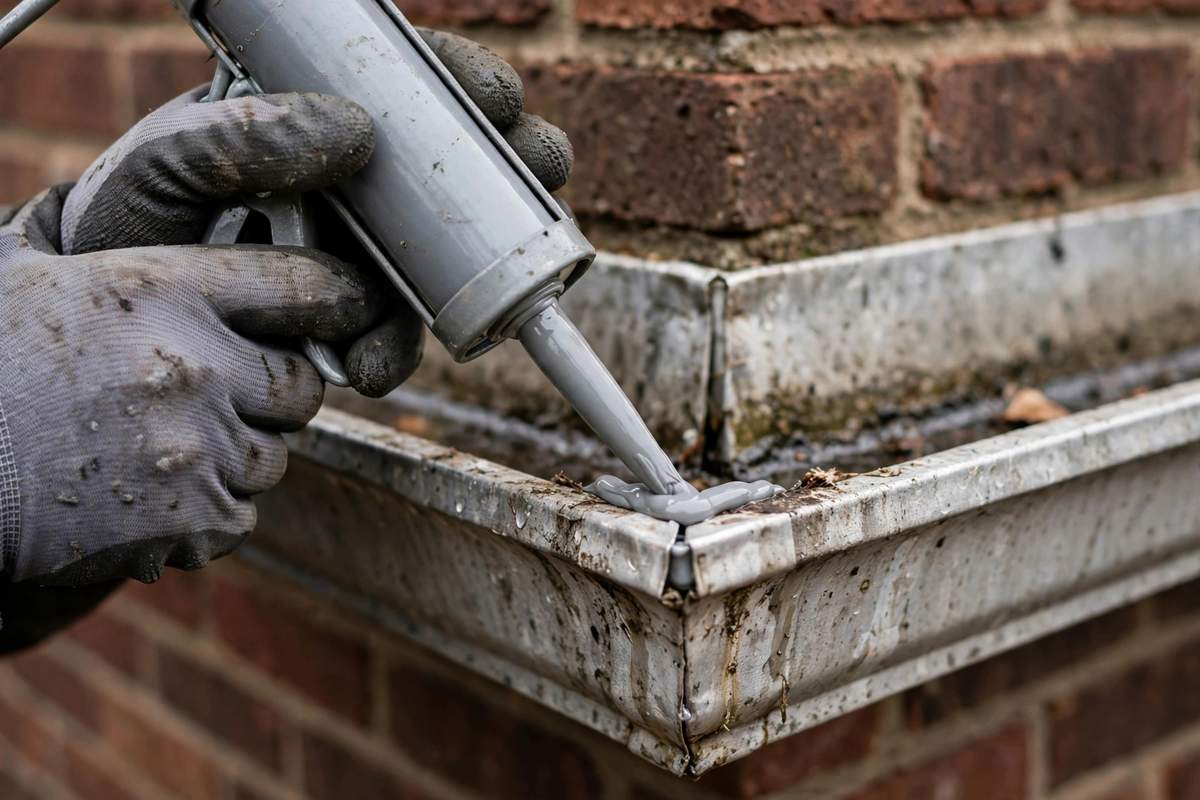
Seams open as sealant ages, as temperature swings work joints apart, and as hangers loosen and let runs shift. A leaking joint is cleaned out, resealed, and checked under running water, and the hangers on either side are checked too, since a joint that moves will open again. On tight 25-foot lots like those in Hermosa, a leaking joint over a gangway soaks a narrow strip of ground repeatedly.

02
✓

Sagging runs, pitch, and realignment

A run sags when hangers loosen, when boards soften, or when debris and ice pull it out of line. Repair resets the run to a pitch that carries water toward the outlet, replaces failed hangers, and realigns sections that have drifted. Notes on sagging gutters explain why a run holding standing water after rain has lost its pitch, and why that standing water speeds the next failure.

03
✓

Gutters pulling away from the fascia
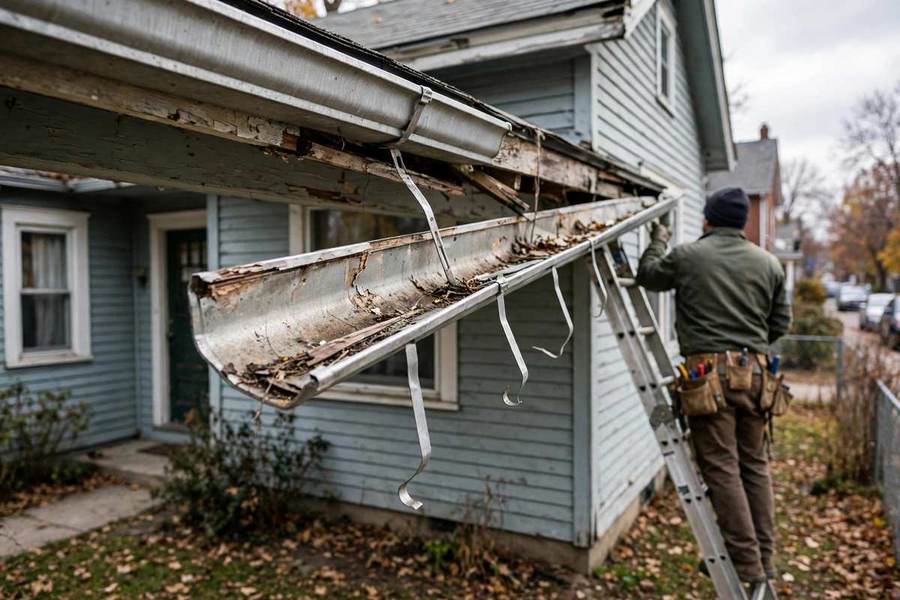
A gap opening between trough and fascia usually means fasteners have lost their hold, boards have softened, or both. The repair reads the boards first: sound boards take new fasteners and a reset run, while soft or rotted boards need fascia repair before the gutter can hang true again. Hanging a run on failing boards only repeats the failure, so the two jobs are planned together.

04
✓

Box and built-in gutters

Older homes sometimes carry box gutters, troughs built into the roof edge behind a cornice or parapet rather than hung on the fascia. They fail differently: linings wear, outlets choke, and water finds its way into the cornice or wall behind. Box-gutter repair reads trough, lining, and surrounding woodwork together. Boulevard stock in East Garfield Park is housing where original troughs may survive and should be verified on site.

05
✓

Inspections and tune-ups

An inspection looks over the whole system: runs, joints, hangers, outlets, downspouts, and the boards behind them. A tune-up follows with the small corrections that keep a sound system sound: tightening hangers, resealing a weeping joint, clearing a choked outlet, and resetting a drifted run. Where debris is doing the damage, gutter cleaning is the repair, and it is said plainly rather than dressed up as something bigger.

How it works

How a repair job runs

The job starts with a call to (872) 867-8606 during business hours: Mon–Sat 6:00 AM–5:00 PM, Sun 6:00 AM–1:00 PM. The call covers the symptom, where it shows, and the type of home, so the visit arrives knowing what to look for first.

The visit traces the symptom to its cause: the run is walked end to end, joints and hangers are checked, outlets and downspouts are tested, and the boards behind the trough are read. The cause is explained before any repair is proposed.

What will be repaired, what will be left alone, and what would change the call from repair to replacement are all discussed openly. If the boards behind a run are part of the problem, that work is part of the same conversation.

Joints are resealed, hangers are replaced or reset, runs are re-pitched and realigned, and damaged sections are swapped out. Where guards are fitted, sections are lifted to reach the trough and reset afterward.

Water is run through the repaired section to confirm it travels to the outlet, drops through the downspout, and discharges where planned. A repair that has not been tested under water is not finished.

Gutter Repair process in Chicago
STEP 01Call during business hours

The job starts with a call to (872) 867-8606 during business hours: Mon–Sat 6:00 AM–5:00 PM, Sun 6:00 AM–1:00 PM. The call covers the symptom, where it shows, and the type of home, so the visit arrives knowing what to look for first.

Tools & methods

Materials and equipment in a repair

01
✓

Sealants for joints and corners

Sealant is the material that keeps joints watertight where two pieces meet: corners, end caps, outlets, and the joints between sectional lengths. Old sealant is removed before new sealant goes on, because sealant layered over failed sealant rarely holds.

02
✓

Hangers and brackets

Hangers and brackets carry the trough and everything in it. Failed hangers are replaced rather than re-tightened into stripped holes, and spacing is set so the run holds its pitch under the weight of water, debris, and winter ice.

03
✓

Replacement sections

A damaged length of trough, a crushed elbow, or a split outlet is cut out and replaced with a matching section rather than patched over. Matching profile and material matters, since a mismatched section creates a new joint problem at each end.

04
✓

Corner and end-cap parts

Corners and end caps are the fittings where runs turn and stop, and they are common leak points as seals age. Replacement fittings are matched to the existing profile so the repaired joint sits flush and seals cleanly.

05
✓

Downspout parts

Elbows, brackets, and downspout lengths are part of repair work whenever the trouble sits below the trough: a crushed elbow, a loose bracket, or a length that has pulled from the wall. Downspout repair covers that work in full, including extensions and discharge.

06
✓

Ladders and access

Ladders are set on stable, level ground for each elevation, and the height of the run decides the setup. Where gutter guards cover the trough, access includes lifting and resetting guard sections without bending them out of shape.

Typical cases

Typical repair situations

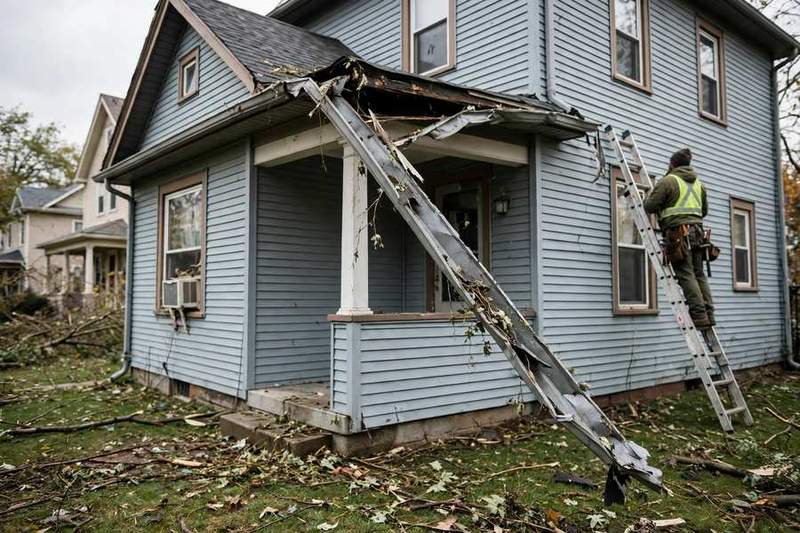
Water dripping from a failed gutter seam above a front walk
Gutter Repair

A typical seam leak over a walkway

A typical worker cottage with a front-gable roof: a steady drip at a seam above the front walk every time it rains, staining the walk and soaking the soil beside the foundation. The approach is to clean out the joint, reseal it, check the hangers on either side, and test the repair under running water. Cottages of this kind stand beside flat-roofed two-flats in Lower West Side, where the two drainage systems sit side by side on the same block.

Call (872) 867-8606 →
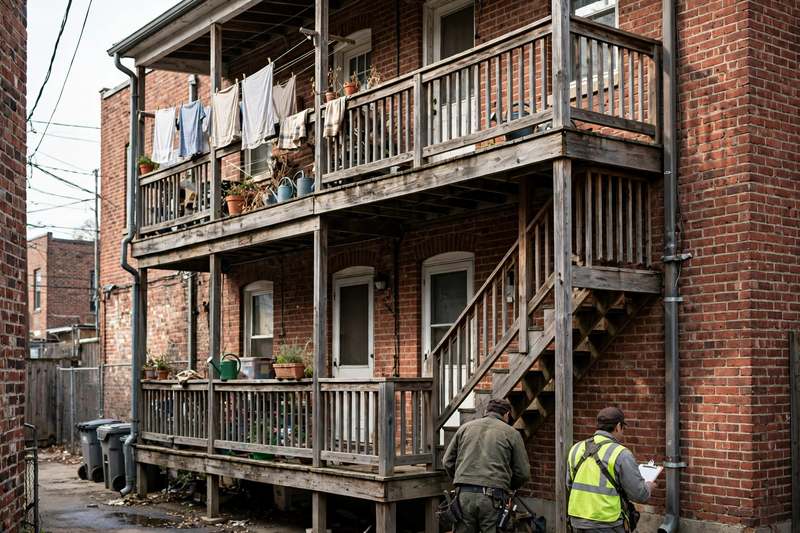
Sagging gutter above a rear porch roof on a brick two-flat
Gutter Repair

A typical sagging run holding water

A typical two-flat rear elevation where the gutter over a porch roof has sagged until it holds a shallow pool after every rain: hangers have loosened, the pitch has gone, and debris has settled into the low spot. The approach resets the pitch toward the outlet, replaces the failed hangers, and clears the low spot, then tests the run under water. Rear elevations like this, with porch roofs and alley garages, are everyday work in Austin.

Call (872) 867-8606 →
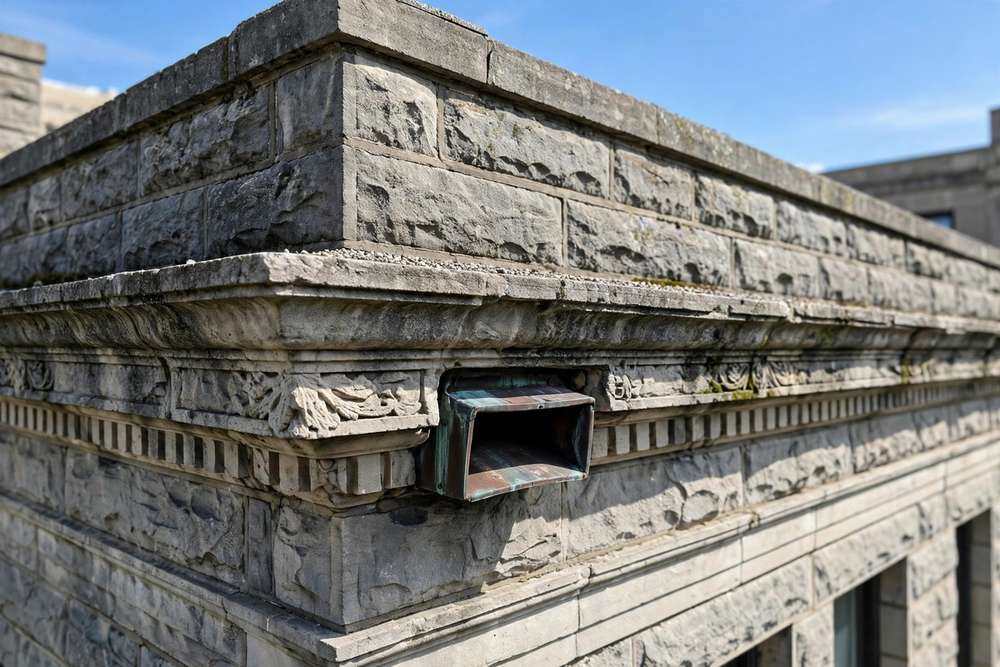
Cornice and roof edge of an older home hiding a built-in gutter
Gutter Repair

A typical box gutter on an older home

A typical older home with a built-in box gutter behind the cornice: water staining appears on the wall below the roof edge, and the trough itself is hidden from the street. The approach reads the trough, its lining, and the outlet together, since a choked outlet and a worn lining produce the same stain for different reasons.

Original eave details are verified on site before anything is changed, because built-in troughs are part of the roof edge, not an add-on.

Call (872) 867-8606 →
Problems we solve

Problems repair work solves

These are the gutter repair problems Chicago homeowners call about most, and how each one is approached.

Ask a pro →
01

Small leaks soaking the fascia

A drip that looks harmless keeps the boards behind the trough damp, and damp boards soften, rot, and lose their hold on hangers. Repairing the joint early protects the boards; leaving it turns a sealant job into board work. The fascia is always read as part of a leak repair.

↗
02

Overflow washing walls and soil

Water spilling over the front edge runs down walls, stains brick, and soaks the soil beside the foundation. The cause is usually a blocked outlet, a sagging run, or a trough sized for less water than the roof delivers, and each cause has a different repair.

↗
03

Ice load on weakened runs

Winter adds weight to every run: snow sits in the trough, meltwater refreezes at the edge, and the load pulls on hangers and joints. Runs that are already loose or sagging suffer most, which is why a repair made before winter holds better than one made after the damage.

↗
04

Shared leaders on attached rows

On attached rows, one downspout often serves more than one roof, so a failure on one elevation becomes a problem for the neighbor's wall too. Repair on a shared leader is read with the whole row in mind, and the discharge point is checked for where its water actually goes.

↗
Proof you can check

Facts you can check before you call

  • 5.0-star Google rating · 17 Google reviews
  • Business address · 2332 N Laramie Ave, Chicago, IL 60639
  • Business hours · Mon–Sat 6:00 AM–5:00 PM, Sun 6:00 AM–1:00 PM
  • Phone · (872) 867-8606
  • Service area · Chicago, IL
Neighbors recommend us

What Chicago homeowners say

★★★★★
“They repaired the gutters and the wood. I recommend this company.”
A

AlexGoogle review · 2 years ago

★★★★★
“Luis promptly came out for both fascia and window molding repair. Great work at a fair price. I'd definitely use him again.”
SS

Stan SheftGoogle review · 2 years ago

Good questions

Gutter Repair questions Chicago homeowners ask

(872) 867-8606 →

Repair fits a system that is sound overall with trouble at one or two spots. Replacement fits a system failing across the whole house. The repair-or-replacement comparison walks through the judgment, and the honest call is made on the roofline, not over the phone.

Seams open as sealant ages and as temperature swings work joints apart, and a run that has shifted will keep opening the same joint. The leaking seams explanation covers the common causes. A repair cleans out the joint, reseals it, and checks the hangers so the joint stays still.

Box gutters, the troughs built into the roof edge behind a cornice or parapet, are repaired by reading the trough, its lining, and the outlet together. Original eave details are verified on site before anything is changed. Call (872) 867-8606 during business hours to talk through what a particular roof edge needs.

A twice-yearly rhythm is widely advised: once in the fall, when leaves peak from September to November, and once in the spring, after May, the wettest month at both Chicago weather stations. Homes under heavy tree cover and homes with flat-roof drainage benefit from the same rhythm, with outlets and leaders checked each time.

It depends on the cause: a resealed joint and a re-pitched run are different jobs, and board work behind the trough changes the scope again. For a quote on a specific problem, call (872) 867-8606 during business hours: Mon–Sat 6:00 AM–5:00 PM, Sun 6:00 AM–1:00 PM. The office is at 2332 N Laramie Ave, Chicago, IL 60639.

Ready when you are

Get gutter repair help in Chicago

Call (872) 867-8606 during business hours — Mon–Sat 6:00 AM–5:00 PM, Sun 6:00 AM–1:00 PM — and tell us what is happening with your gutters.

Call (872) 867-8606 →
Get in touch by phone

Talk to a Chicago gutter crew

Call (872) 867-8606 during business hours. Tell us what is happening with your gutters and we will talk through the next step on the phone.

Call during business hours(872) 867-8606
Office address2332 N Laramie Ave, Chicago, IL 60639
Office hoursMon–Sat 6:00 AM–5:00 PM, Sun 6:00 AM–1:00 PM
↗
Questions?Call now