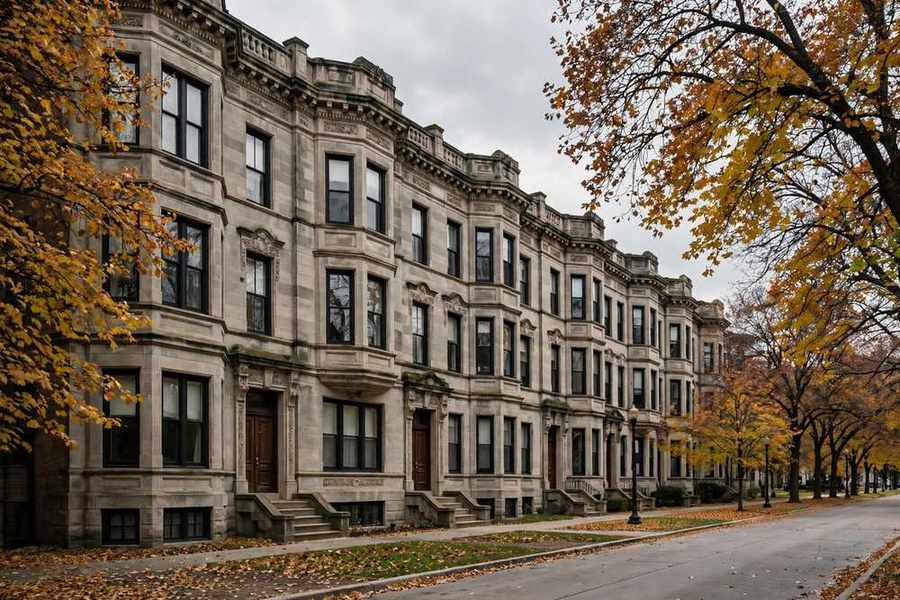
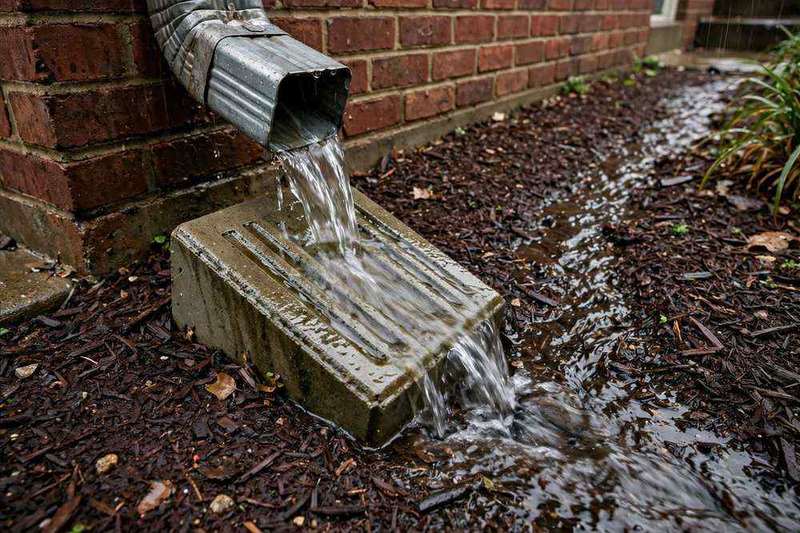
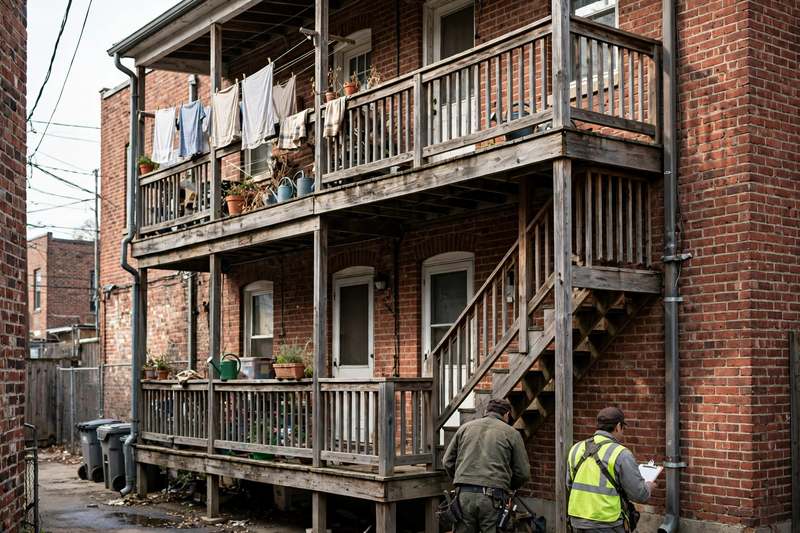
The 207-acre Humboldt Park anchors the area, and greystones from the late 1800s skirt the park, joined by brick two-flats, three-flats, brick bungalows notably west of Pulaski, frame cottages near The 606, historic apartments, and increasing new construction. One sales summary put two- to four-unit buildings at over half of sales, with single-family homes at 41 percent, making the two-flat the centre of this page. Flat greystone flats and apartments dominate, with pitched bungalows, cottages, and single-family houses beside them, so homes of this era typically divide by position: flat-roof-first framing for park-facing stock, parapet, scupper, and internal drainage with rear shared downspouts on flats, and eave gutters on bungalows and cottages, and gutter repair follows the stock on the street.
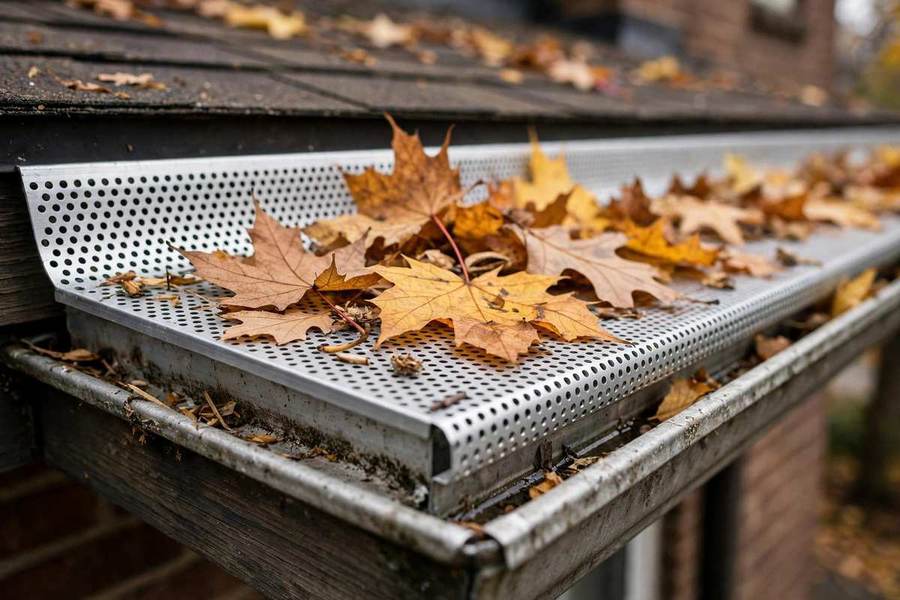
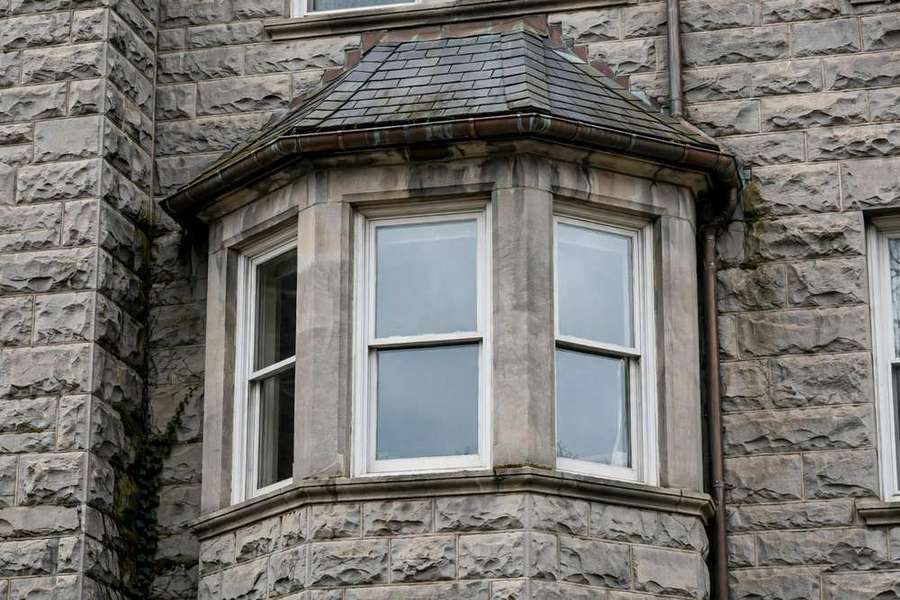
Flat-roof-first framing for park-facing stock rests on single-address support, a 1901 greystone at 3143 W Augusta with a flat rubber roof, and it is not generalised beyond that honesty: each greystone is checked on its own roof form. Limestone greystone cornice and fascia care is verified per building, park mature trees add leaf loads, and the boulevard segment along Sacramento and Augusta carries the Emerald Necklace character. East and West divide at Sacramento Boulevard by one source, with a gentrification gradient mixing old and new scope, and gutter cleaning on a mixed block follows the building in front of us.
Humboldt Park itself is a historic park and district, on the National Register with City designation for park buildings and landscape, and that designation does not make the surrounding housing a landmark district. No residential landmark district has been verified for the housing blocks, so this page claims none. Paseo Boricua, along Division between Western and California, is a commercial corridor and sits outside residential scope, as do the park institutions.
Explore Humboldt Park services →