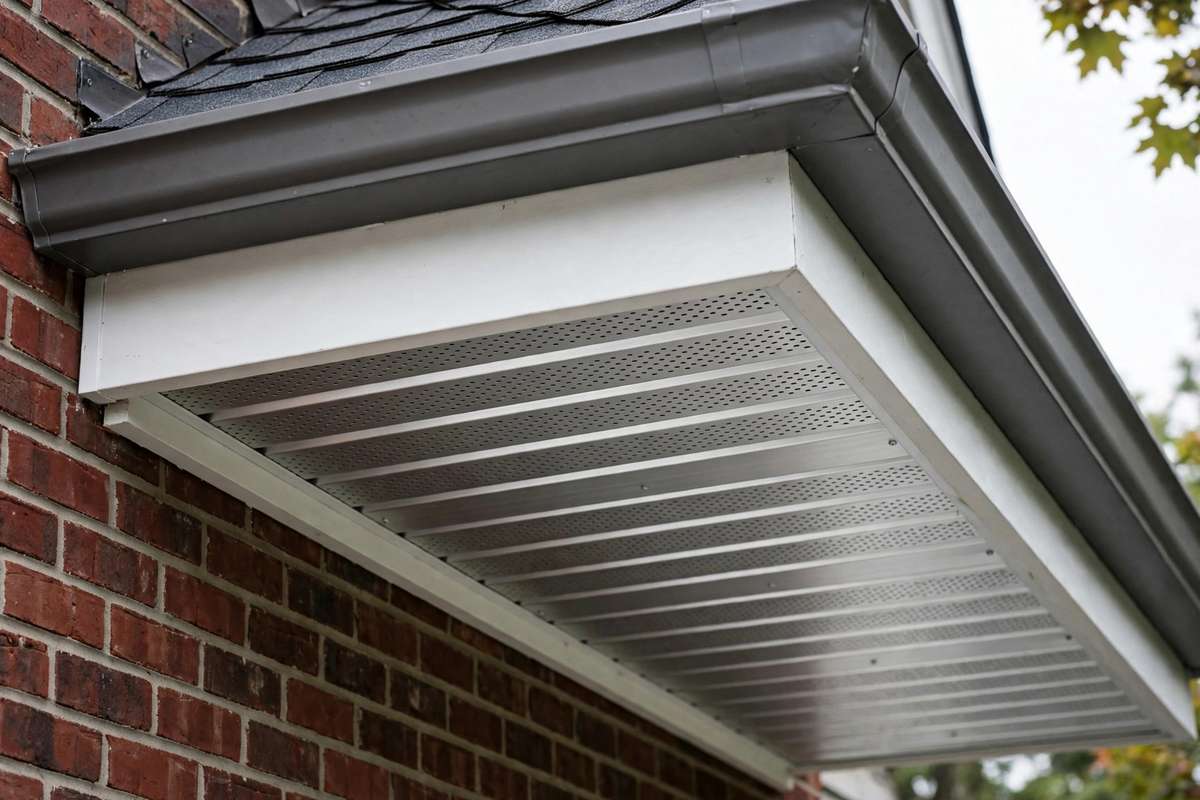
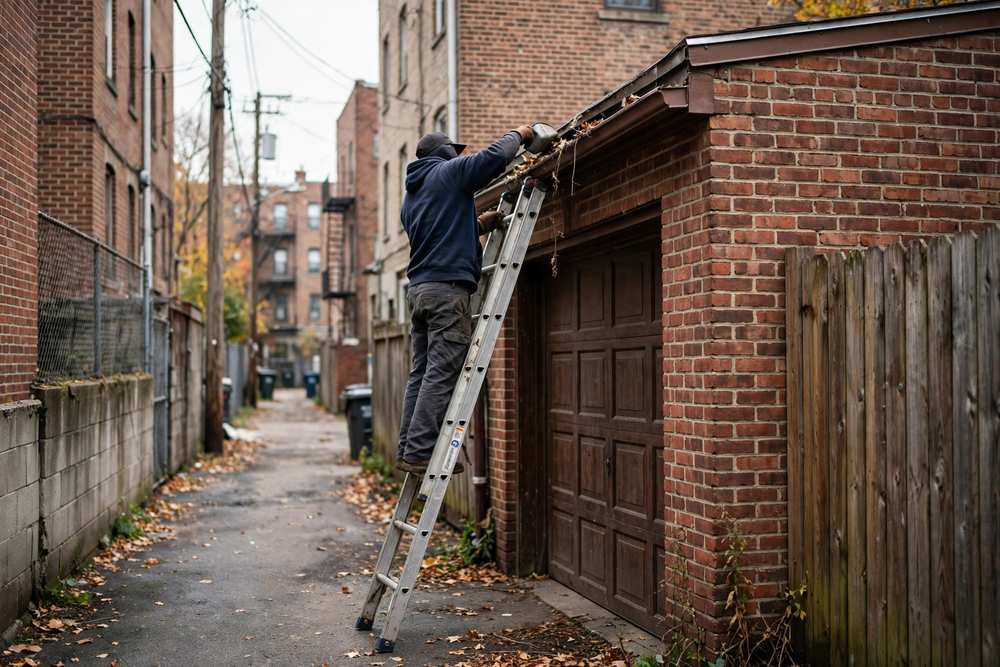
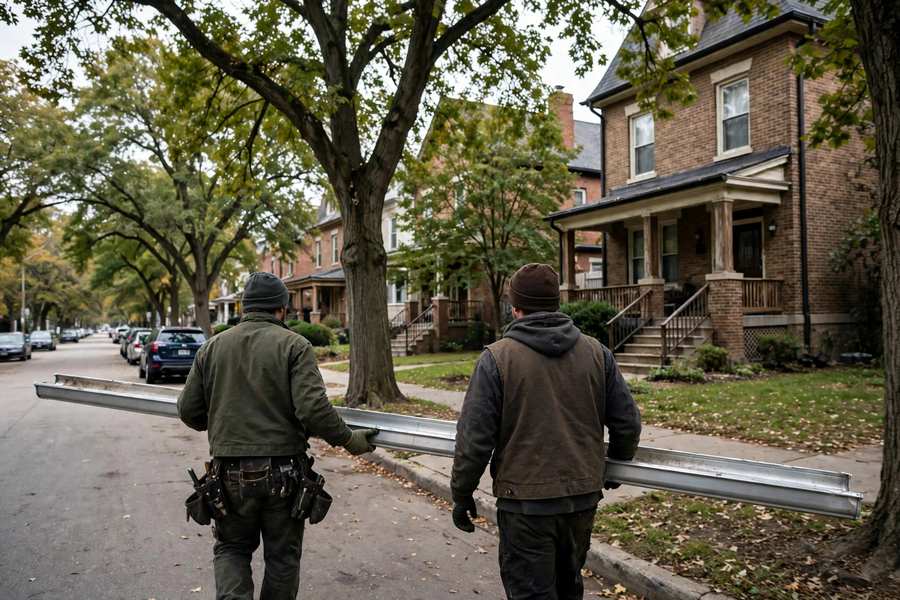
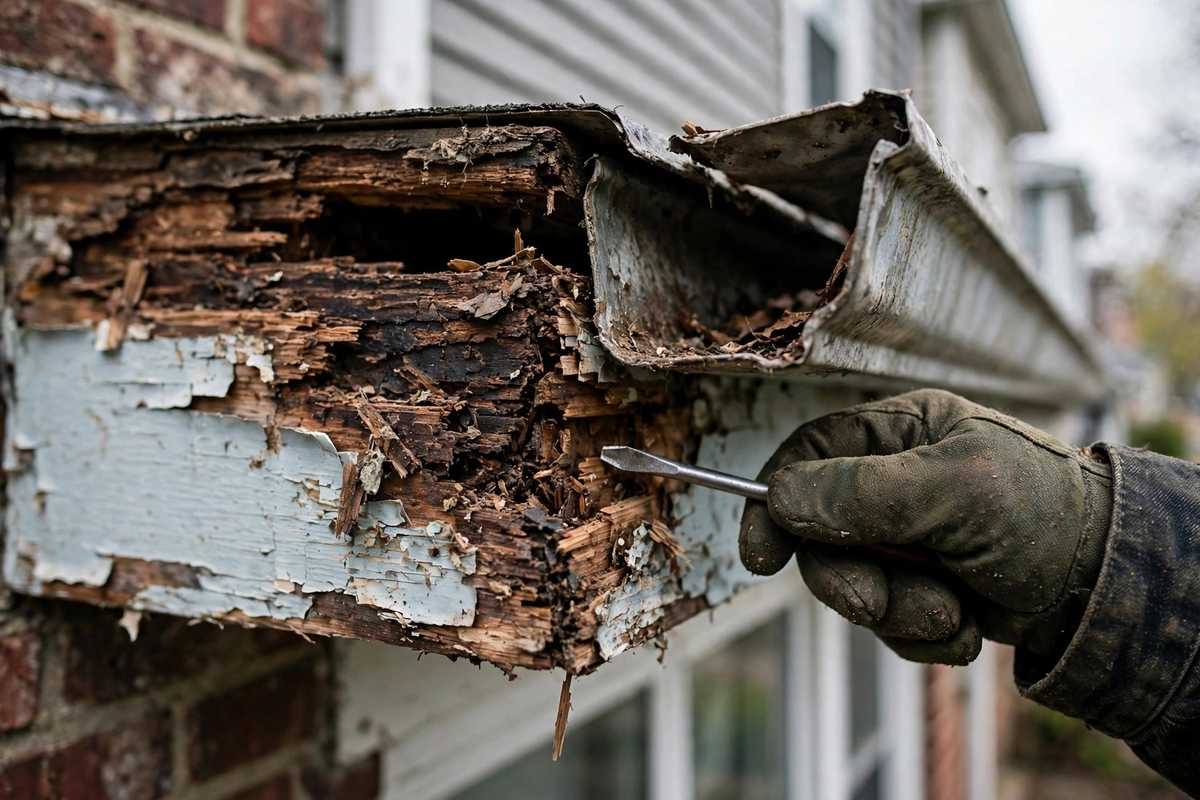
The Noble farmhouse of 1833 at 5624 N Newark, the oldest extant building in Chicago, anchors an area that the Norwood Land and Building Association laid out in 1868 with a picturesque curvilinear plan. Early Victorians stand on the glacial ridge, joined by Tudor, Foursquare, bungalow, and ranch houses, many by noted architects, beside Sears catalog houses. The National Register district spans 1880 to 1940 and includes Victorians, Foursquares, Tudors, Colonial Revivals, bungalows, Cape Cods, post-war ranches, and catalog houses. Roofs here are almost entirely pitched, and homes of this era typically carry eave gutters, with Victorian and Tudor rooflines dividing into valleys and short segments beside long bungalow runs, so gutter repair is planned per roofline.
Large lots and expansive lawns allow generous extension and grading room, a practical advantage that shapes downspout placement on nearly every block. Mature trees add a leaf load across the area, and the ridge siting of the early Victorians gives those houses a drainage advantage that is noted here as an inference, not a flood claim. Half-round or copper profiles remain plausible on Victorian and Tudor stock but unverified, so original eave details are checked house by house rather than assumed.
The Norwood Park Historic District was listed on the National Register on 21 November 2002, and the listing is honorary only: the local historical society states that National Register listing does not impose any construction restrictions, and a City landmark district effort never came to fruition. Two individual Chicago Landmarks stand here: the Noble-Seymour-Crippen House, designated on 11 May 1988, and the John Wingert House, designated on 31 July 1990. Check the designation details for the specific address before work, since the district and the individual landmarks are different things.
Explore Norwood Park services →