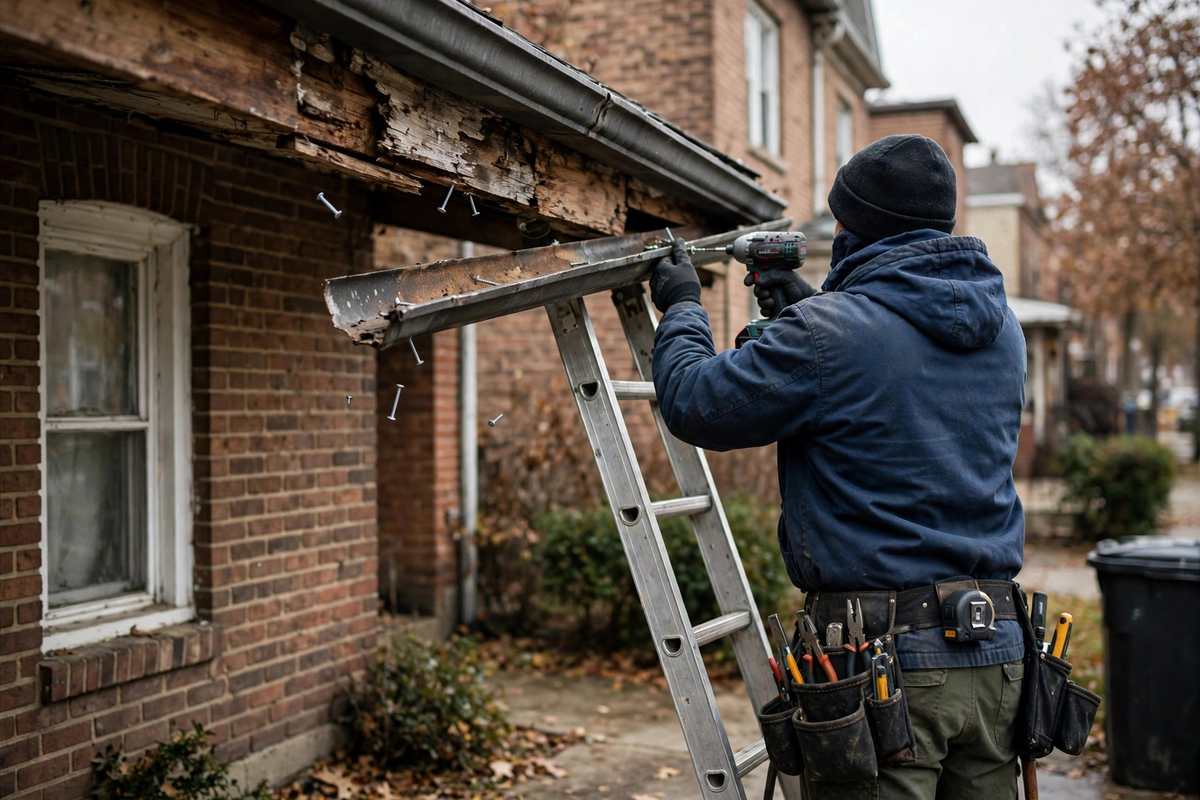
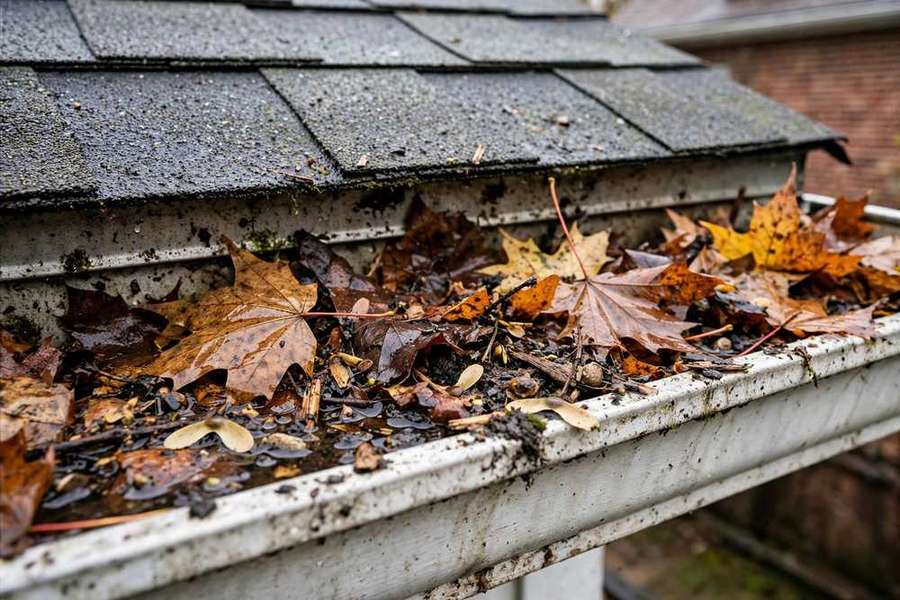
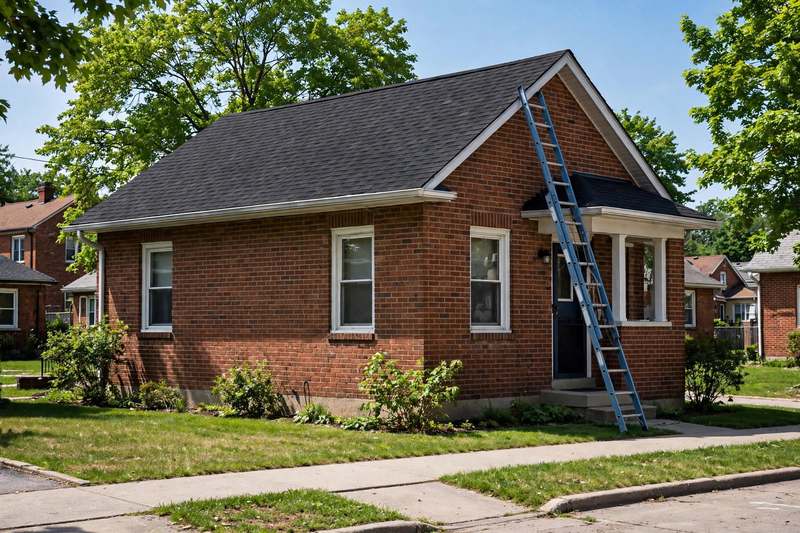
Portage Park, in Jefferson Township and annexed in 1889, grew from 24,439 residents in 1920 to 64,203 in 1930, and the 1940 Fact Book recorded 14,721 structures, 61.3 percent built between 1920 and 1929, mostly one- to two-storey brick, with the brick bungalow the most common form; by 1939 only 35 percent of structures were wood. The stock today is bungalows and two-flats predominantly, American Foursquares in wood, and Cape Cods, Georgian Revivals, and ranches from the 1940s-1970s second wave. Pitched roofs dominate, with flat roofs only on two-flats, and homes of this era typically carry K-style eave gutters in the purest eave-gutter case on the North Side, so gutter repair follows pitched-roof logic block after block.
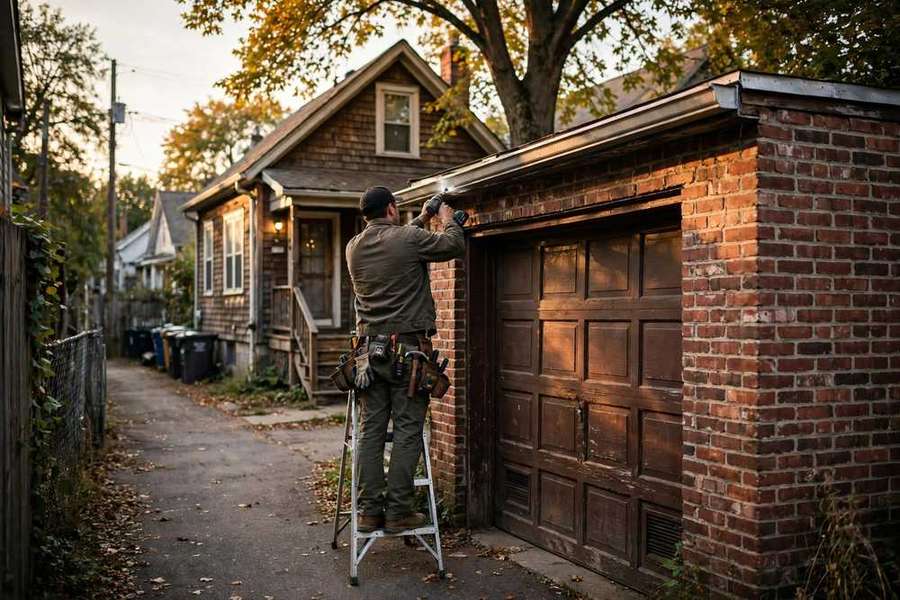
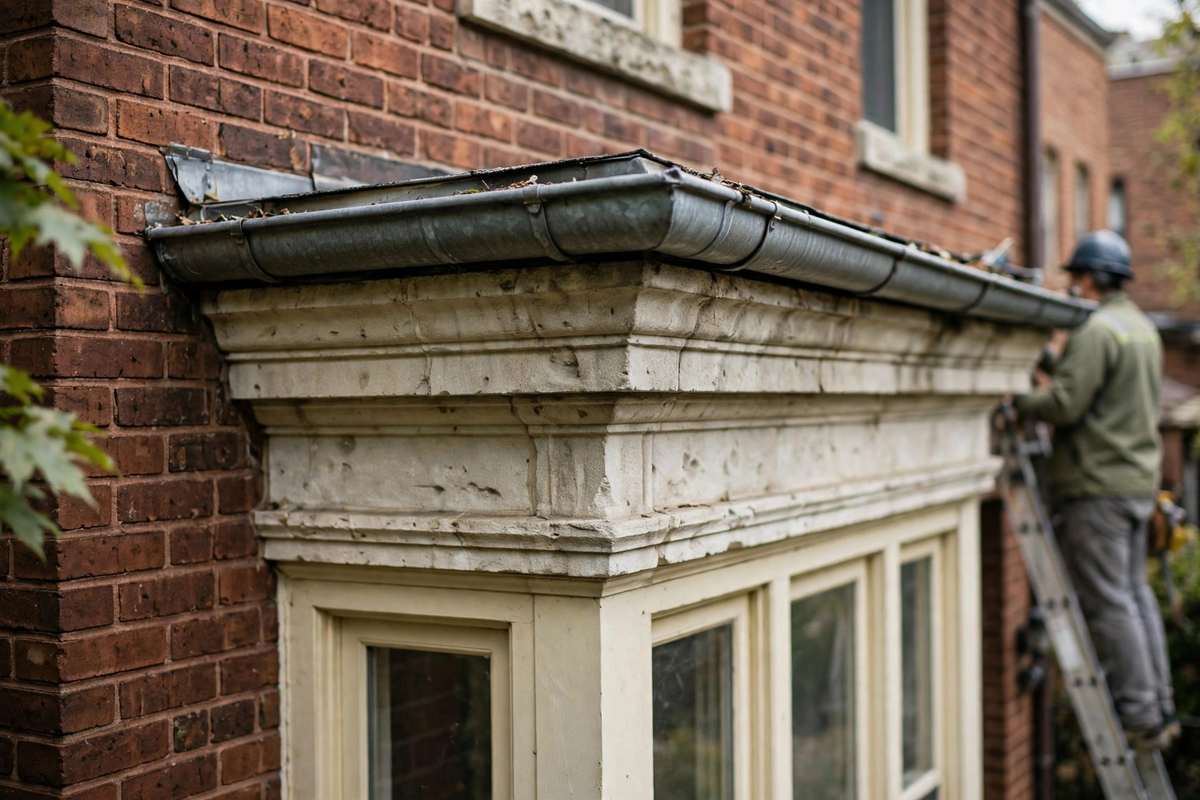
Wood Foursquares and brick bungalows meet the eave with different fascia substrates, and each is checked on its own boards. The 1920s brick stock with full basements makes extensions and grading relevant on every lot, and detached garages reached by alleys add secondary runs. No built-in gutter survey exists for this area, so no claim is made that box gutters are typical here; original eave details are checked house by house. Downspout discharge and grading deserve care where full basements sit below 1920s brick walls.
The Portage Park Bungalow Historic District, a Chicago Landmark since 2010 and on the National Register since 2014, holds 225 buildings including 189 brick bungalows from 1915 to 1930, with exact boundaries verified per address. Six Corners, at Irving, Cicero, and Milwaukee, is the largest commercial centre outside the Loop and sits outside the residential scope of this page. Developer subdivisions by Szajkowski, Schorsch, and Koester and Zander, and a Hatzfeld and Knox Prairie and Craftsman thread running through the fieldhouse, bungalows, and Villa District, give the blocks a developer-built character.
Explore Portage Park services →