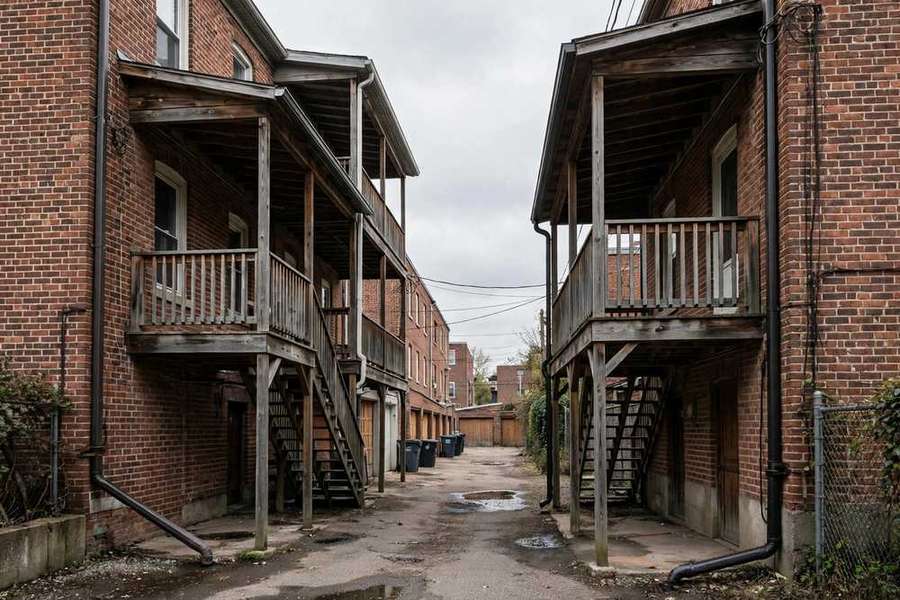
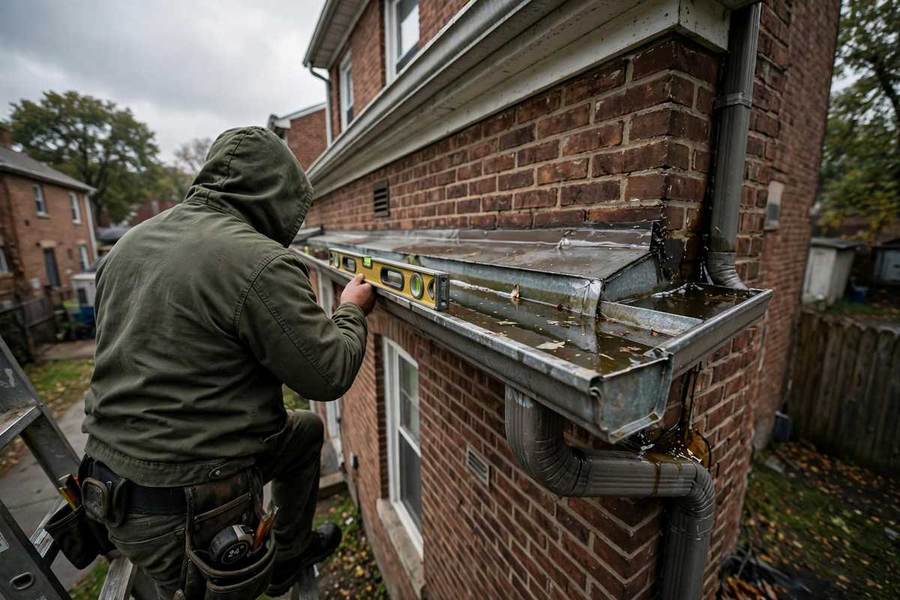
Little Village, officially South Lawndale, is one of the densest community areas, with 69,884 residents in 2024. DePaul's Institute for Housing Studies reported in 2025 that 16.7 percent of homes are single-family, 0.2 percent condo, 71.3 percent in two-to-four-unit buildings, and 11.8 percent in buildings of five or more units, the most two-flat-dominated stock in the research. Brick two-flats predominate, with examples from 1888 to 1929, finished attics, rear porches, detached garages, alley access, and basements, on solid owner-occupied blocks that were fully built up by the 1920s. Homes of this era typically drain through flat roofs with rear drainage, so gutter repair here is flat-roof-first, with pitched elements confined to rear porches, dormered attics, and detached garages.
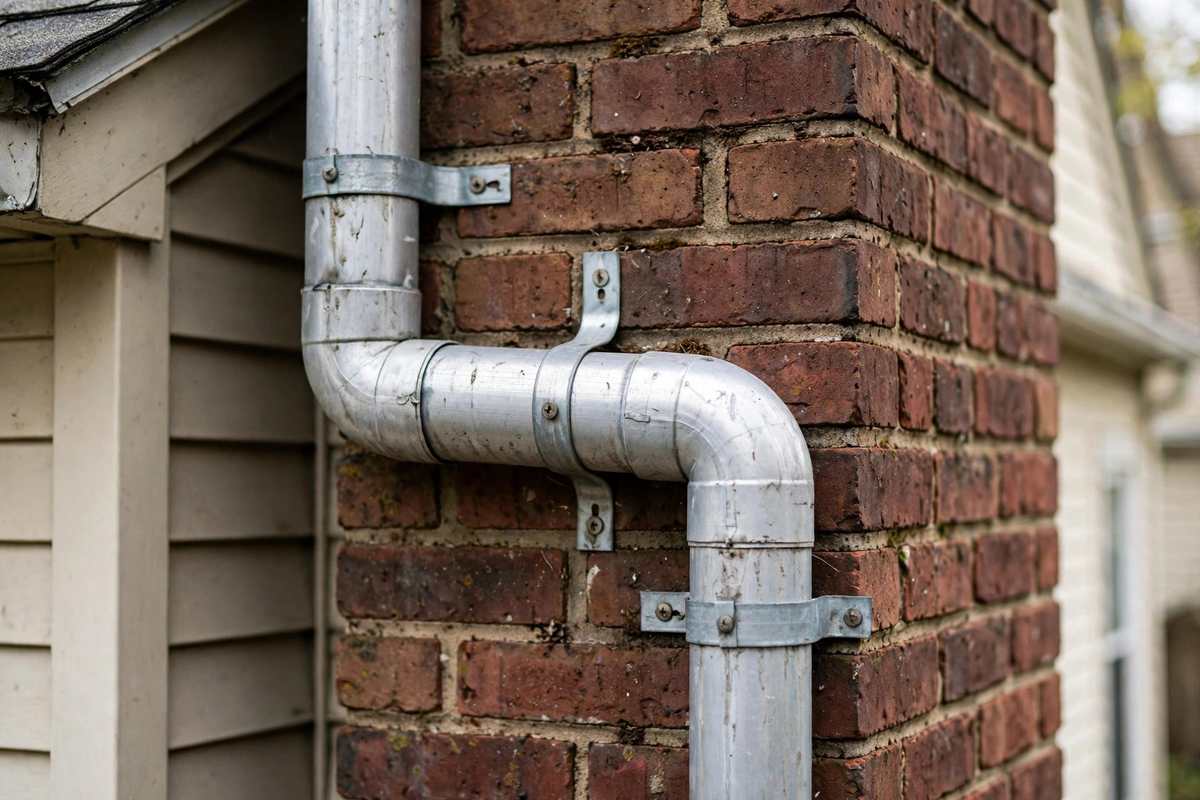
Each lot carries a small system of roofs rather than one: the flat main roof, the rear wooden porch, the dormered attic, and the detached garage off the alley. Finished-attic two-flats add dormer valleys and ice-dam exposure at dormer cheeks, while rear porches and alley garages add secondary short runs that are easy to overlook. Ice dam prevention and downspout repair planning should cover all three small roofs together, since a failure at the porch or garage can send water against the main house just as surely as a failed rear leader.
Marshall Square, in the northeast, reflects Pilsen-home styles and marks a slight age gradient from the Little Village core, whose houses and two-flats run slightly younger than Pilsen's. The 26th Street commercial district and the Cook County Jail sit inside the area but outside this page's homeowner framing: commercial frontage is excluded, flats over storefronts drain through parapets over sidewalks, and the jail is institutional. No landmark district was verified for South Lawndale. For the full range of work, see the services page.
Explore South Lawndale services →