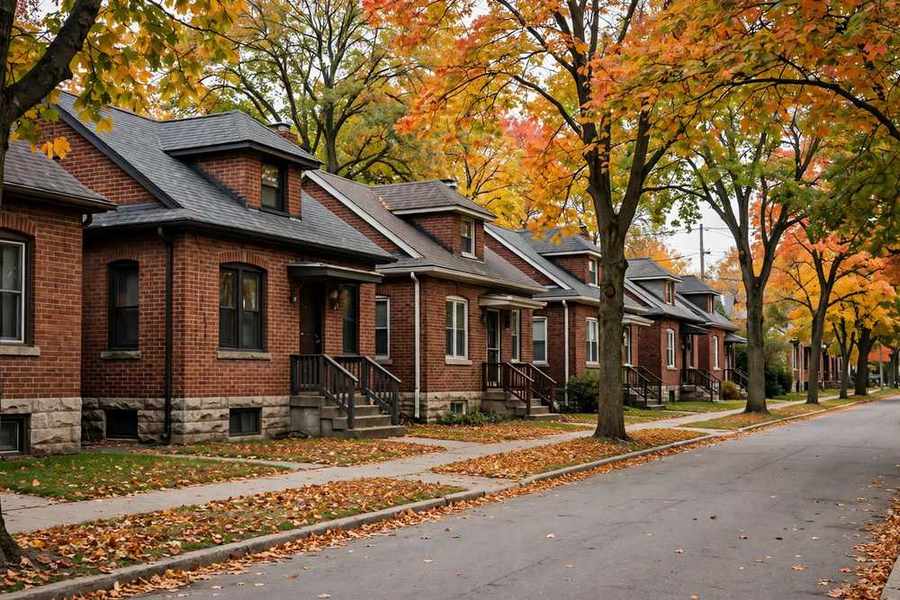
Burnside, known as The Triangle, is the least populous community area, with 2,527 residents in 2020, covering about 0.62 square miles, and this page is honest about the tiny scale: a modest single-family enclave inside a railroad triangle, nothing larger. Railroads bound all sides, with the Illinois Central to the west, the Rock Island to the south, the New York Central and Norfolk Southern to the east, and 87th Street to the north. The ground is low and swampy near Lake Calumet, settlement began in the 1890s around the Illinois Central Burnside shops and roundhouses, and the W. V. Jacobs subdivision housed railroad workers. Post-Second-World-War middle-class single-family infill filled formerly undeveloped northern sections, and Black middle-class homebuilding on vacant areas followed from the 1960s. The present stock is overwhelmingly residential: a small, quiet enclave of modest single-family homes hemmed by rail embankments. Roof forms were not surveyed, and pitched single-family roofs, in bungalow, ranch, and Cape variants by era, with conventional eave gutters, are inferred and must be verified per house, so gutter repair here starts with the individual house, not a template.
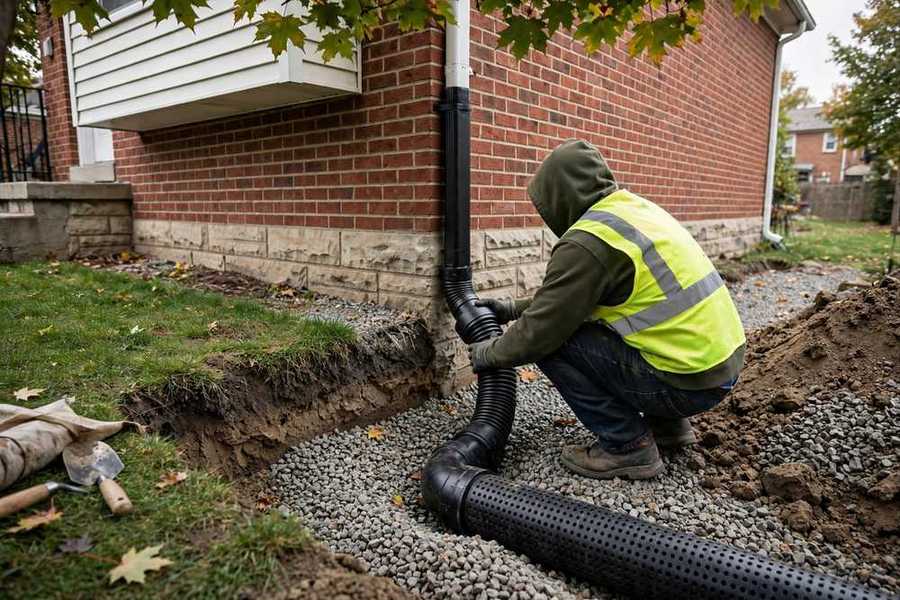
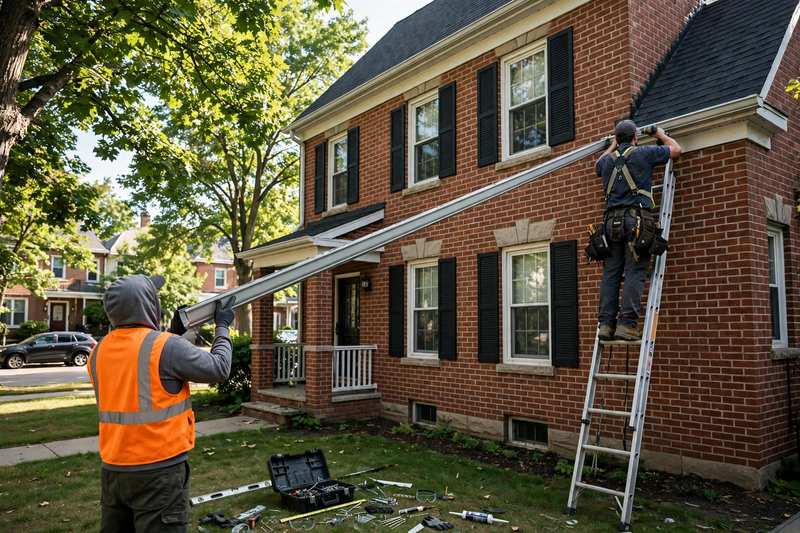
Two build-outs define the enclave: 1890s railroad-worker houses and postwar northern infill, spanning eras that must not be described as bungalow-belt uniformity. Detached single-family eave gutters plus detached-garage runs form the scope, and the rail-embankment enclosure traps debris and leaves and affects wind, though that was not surveyed. Low and swampy origins plus Lake Calumet proximity make grading and discharge relevant, while current flood risk was not verified per block and no flood zones are assigned. Gutter cleaning and downspout repair should be planned for the enclosed, low-ground conditions of the triangle.
Rail yards and shops, the Finkl Steel eastern edge, the CTA Training Facility, and industrial parcels are excluded. No landmark district was verified for Burnside, and rail infrastructure is historic context, not residential design review. Full details of the work offered sit on the services page.
Explore Burnside services →
This page covers the tiny single-family enclave inside the railroad triangle only, and acknowledges the tiny scale: 2,527 residents in 2020 across about 0.62 square miles. It excludes rail yards and shops, the Finkl Steel eastern edge, the CTA Training Facility, and industrial parcels. Roof forms were not surveyed, and no bungalow-belt uniformity is claimed across the 1890s and postwar eras.
Gutter Lake City - Gutters Installation & Repair